
The railing is the first thing people see on a deck — and the part that has to meet code. Here's how cable, metal baluster and wood railings compare for a San Antonio backyard.
Last updated: October 2026
Cable, metal or wood deck railing each fits a different kind of San Antonio backyard. Cable railing keeps views open and works well on elevated and Hill Country decks. Metal balusters — usually black powder-coated — give a clean, durable look with very little upkeep. Wood railing matches a cedar deck and costs the least, but needs the same sealing and staining as the deck itself. Whatever you choose, it has to meet code: residential guards are generally required when a deck sits more than 30 inches above grade.
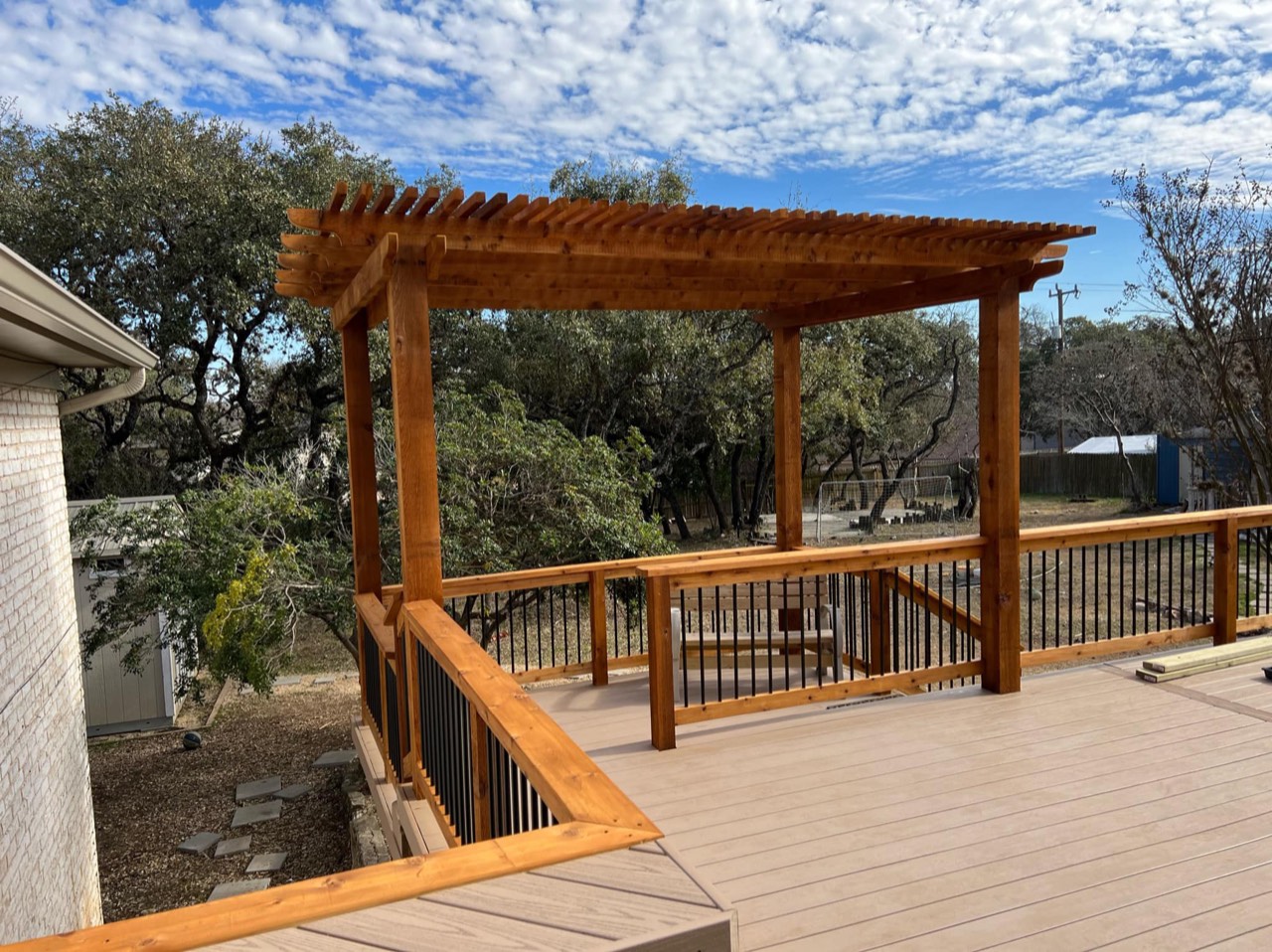
How Do Deck Railing Options Compare?
| Railing | Look | Upkeep | Best for | Relative cost |
|---|---|---|---|---|
| Cable | Open, modern, keeps the view | Low; cables need periodic tensioning | Elevated decks, view lots | Higher |
| Metal balusters | Clean lines, classic | Very low | Composite and cedar decks | Middle |
| Wood | Warm, traditional | Sealing and staining with the deck | Cedar decks | Lower |
Why Choose Cable Railing?
Cable railing all but disappears when you're sitting down, which is why it's popular on second-story decks and lots with a view. Cables are run through a sturdy frame and tensioned tight. They do need occasional re-tensioning, and the frame has to be built strong enough to hold that tension over time.
Are Metal Balusters a Good Choice?
Yes. Powder-coated metal balusters set in a wood or composite frame are one of the most popular railing styles we build. They hold up to Texas sun and humidity, don't need painting and pair well with both cedar and composite decking.
When Does Wood Railing Make Sense?
On a cedar deck, matching cedar railing gives a warm, unified look and is the lowest-cost option up front. The trade-off is maintenance — it needs to be cleaned and re-sealed on the same schedule as the deck boards.
What Does Code Require for Deck Railings?
Guards are generally required when the walking surface is more than 30 inches above grade, with a minimum height and opening limits so a small child can't slip through. Local requirements vary, so we confirm them during design and permitting. The American Wood Council's deck construction guide is a good reference on safe guard construction. If you're in an HOA area, see do you need a permit or HOA approval?
Which Should You Choose?
- Choose cable if: you have a view or an elevated deck and want the railing to fade into the background.
- Choose metal balusters if: you want a durable, low-upkeep railing that suits almost any deck.
- Choose wood if: you're building in cedar and want a classic, matching look.
Frequently Asked Questions
Can I mix railing styles?
Yes. Some homeowners use cable on the view side and metal balusters or wood elsewhere.
Can you replace the railing on my existing deck?
Often, yes — as long as the posts and framing are sound. We'll check during your consultation.
Do multi-level decks need railings on every level?
Any level high enough to require a guard does. See building a multi-level deck on a sloped Hill Country lot.
Want to see railing options on your deck? Call 210-945-8463 or get a free quote — no pressure, written quote within five business days.